
UNM Bureau of Business and Economic Research
BBER experts collaborating around research materials

About BBER

The Bureau of Business and Economic Research is the recognized expert in socioeconomic data for the state of New Mexico. BBER has helped government agencies, business leaders, decision-makers and non-profit organizations identify, understand, and forecast trends as well as changing economic markets across the Land of Enchantment.

ResearchAuthoritative, objective and non-partisan analysis.
DashboardsVisually communicate relevant real-time data.
FOR-UNMEconomic forecasting for New Mexico and five MSAs.
Data BankSpecialized data from state and national sources.
News Releases
News releases section art

Cielo Centro Observatory poised to boost education, workforce development and local economy

**Taos, N.M.** — A new impact study commissioned by The University of New Mexico-Taos highlights the significant educational, economic, and community benefits of the proposed Cielo Centro Observatory, a cornerstone of the college’s broader Cielo Centro (Sky Center) project. Conducted by Alexis P. Amodio-Cardwell, Research Scientist at UNM’s Bureau of Business & Economic Research (BBER), the October 2025 study evaluates the social, financial, and environmental impacts of constructing a dedicated roll-off roof observatory at UNM-Taos. The facility will house a powerful 36-inch Dobsonian telescope, generously gifted by the King and Oglesbee families, offering students, residents, and visitors a rare opportunity to observe celestial objects millions of light-years away. According to the report, the observatory has the potential to transform STEM education in Northern New Mexico while positioning UNM-Taos as a regional hub for astrotourism, workforce development, and community engagement. **Klauer Campus, an ideal observatory location** Located at nearly 7,000 feet in New Mexico’s high desert, Taos offers exceptional conditions for stargazing. Surrounded by natural mountain barriers near the historic Taos Pueblo, the area is naturally shielded from significant light pollution, preserving clear, dark night skies. Studies show that light pollution levels in Taos and Taos County remain well below harmful thresholds, even near urban areas. Taos also benefits from consistently clean air and clear weather. Over the past seven years, air quality has been rated “good” for most of the year, and skies have been clear or mostly clear more than 80 percent of the time. Together, these conditions make UNM Taos an ideal location for the Cielo Centro Observatory and position the region as a leader in dark sky conservation and astrotourism in New Mexico. **Expanding access to hands-on STEM learning** The study emphasizes the observatory’s role in expanding access to immersive, hands-on science education—particularly for rural and underserved communities. UNM-Taos serves Taos and Colfax counties, which together include 23 PreK-12 schools serving more than 3,400 students. Many students in these areas have limited access to advanced scientific equipment and experiential STEM learning. By turning the night sky into a classroom, the Cielo Centro Observatory would support students at every level—from guided sky tours for younger learners to advanced research, data collection, and mentorship opportunities for middle school, high school, and college students. **Supporting career pathways and workforce development** In addition to academic enrichment, the observatory would strengthen workforce development by helping students build technical skills in astronomy, instrumentation, and data analysis. The study notes opportunities for internships, mentored research, and collaboration with STEM professionals—experiences that prepare students for careers in science, technology, and the growing space economy. The report also points to the potential development of a Southwest Regional Space-STEM Consortium, which would connect underserved students with professional and technical opportunities while sharing resources among regional institution. This News Release is also at [https://news.unm.edu/news/cielo-centro-observatory-poised-to-boost-education-workforce-development-and-local-economy ](https://news.unm.edu/news/cielo-centro-observatory-poised-to-boost-education-workforce-development-and-local-economy)

Date Published: 04/09/2026

Collaborative creative economy impact report released

Over the past 18 months, The University of New Mexico’s Bureau of Business and Economic Research (UNM BBER), commissioned by and working in partnership with the City of Albuquerque’s Department of Arts & Culture, has completed a comprehensive study of Albuquerque’s creative economy.

Date Published: 01/12/2026

Government shutdown impacts New Mexico federal workers

According to federal government estimates, there are about 22,000 federal workers in New Mexico, including many essential personnel and military personnel, so fewer are expected to be affected by furloughs or layoffs.

Date Published: 10/02/2025

Our Publications
Publications section art

Assessing the Impacts of the Proposed Cielo Centro Observatory

In October 2025, The University of New Mexico-Taos (UNM-Taos) commissioned UNM’s Bureau of Business & Economic Research to evaluate the social, financial, and environmental impacts of the proposed Cielo Centro Observatory. The observatory – which will house the powerful 36-inch diameter, 12-foot, 6-inch tall Dobsonian telescope gifted by the King and Oglesbee Families – will provide students, community members, and visitors the unique opportunity to form a personal connection with the universe by allowing individuals to observe celestial objects millions of light years away. As part of the broader Cielo Centro (Sky Center) project, the observatory will support workforce development and fuel community prosperity by preparing students for meaningful careers through internships, partnerships, and hands-on research. The observatory will also allow UNM-Taos to capitalize on the fast-growing and emerging industry of astrotourism. Altogether, the construction of a dedicated roll-off roof observatory can position UNM-Taos to expand educational programming, diversify the local economy, and promote environmental stewardship through dark sky preservation.

Date Published: 2026-04-09

CABQ Arts and Culture

This study was initiated by the City of Albuquerque’s Arts and Culture Department in 2024. Working with the University of New Mexico’s Bureau of Business and Economic Research, the City sought to update previous research on Albuquerque’s creative economy and better understand current opportunities, challenges, and trends in the creative professions both locally and nationally

Date Published: 2026-01-12

Defining Arts & Culture 2026 in Addendum

This document is a companion to the “Albuquerque’s Creative Economy” study released January 2026. This document outlines how the industry data was reviewed and assessed as part of Creative Economy. In the future, researchers can use this detailed approach for comparisons.

Date Published: 2026-01-12

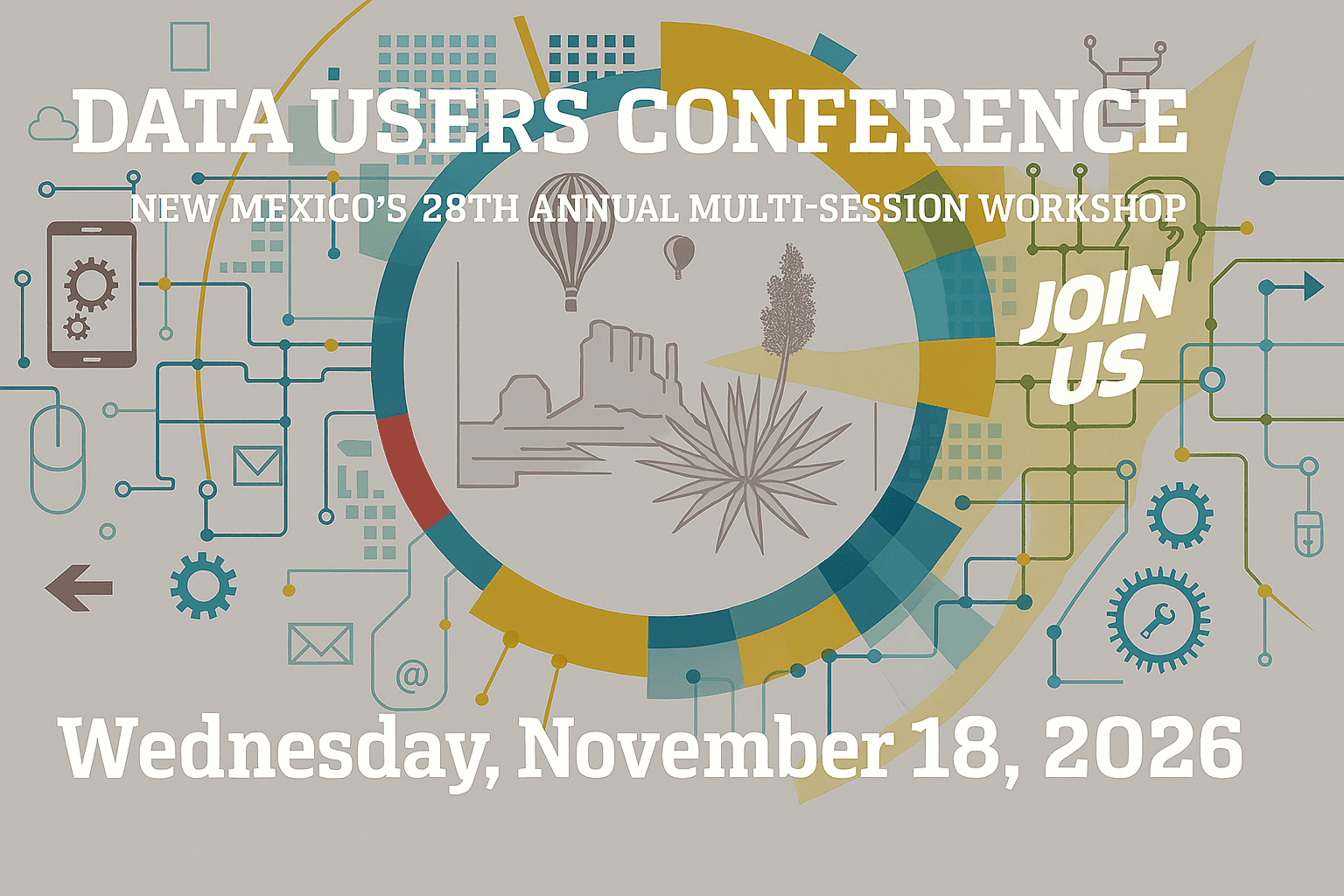
Next Data Users Conference
New Mexico Data Users Conference banner
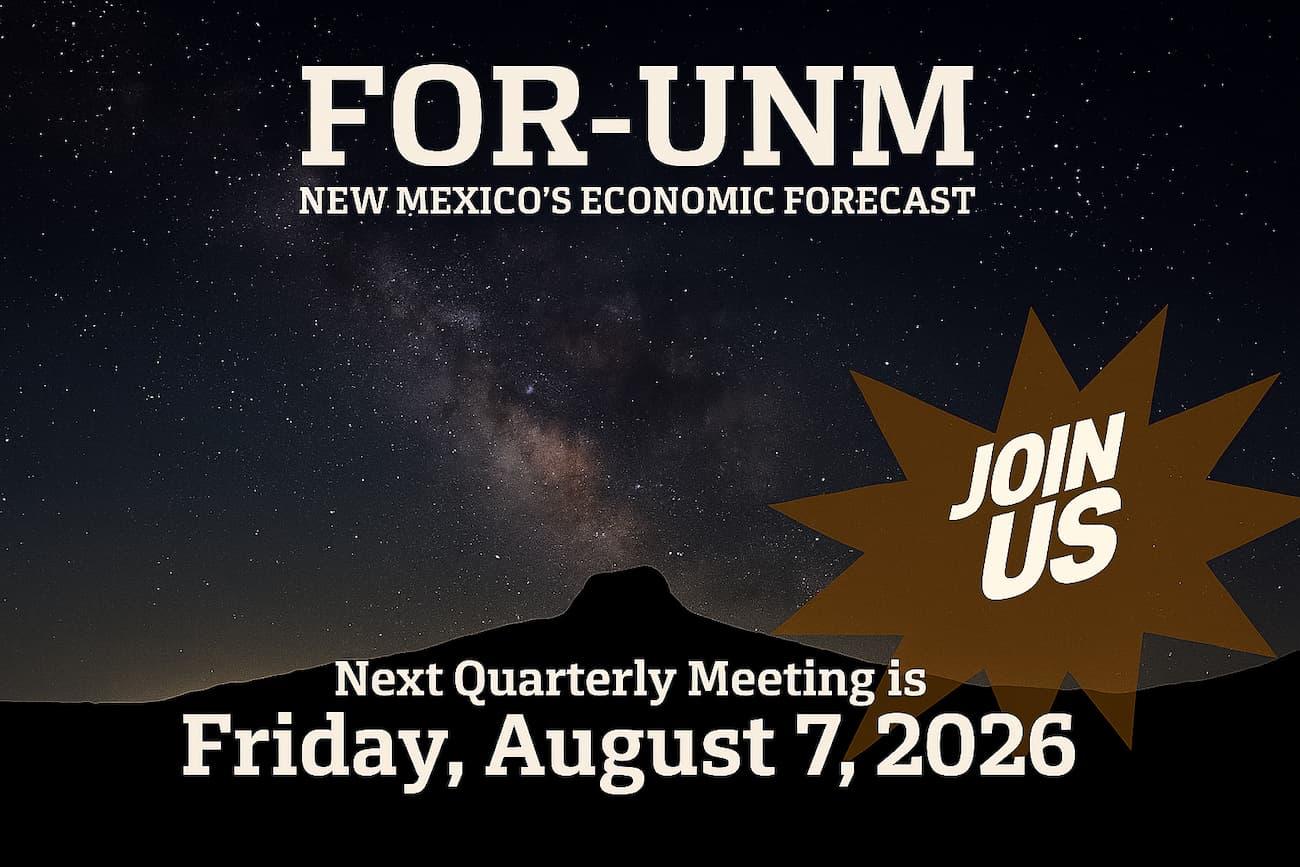
FOR-UNM
Forecast meeting banner